
BOP Federal Release Records
The Bureau of Prisons inmate locator contains federal inmate records from 1982 forward. It is the proper public lookup for a person who served a federal prison sentence. It does not cover ordinary Chattahoochee County Jail bookings, Georgia state prisoners, immigration detainees, or every person held before federal trial.
A federal result may show "Released" or "Not in BOP Custody" with a release date. BOP explains that either label means the person is no longer in its custody. It does not prove that no other correctional, law-enforcement, parole, or supervised-release system has authority.
Search BOP Federal Releases
The official BOP inmate locator supports searches by federal register number or personal information. A register number gives the strongest match. For a name search, compare age, race, sex, and release information before accepting a result.
- Open the BOP inmate locator and choose number search when a federal register number is known.
- Otherwise enter the full name and narrow the result with available identity fields.
- Compare the register number and personal details to the federal court record.
- Read the location or release-status line and any displayed release date.
- If the result says released or not in custody, check the court docket for the legal outcome and supervision term.
- Use another agency only when a detainer, transfer, or separate case points there.
A federal court record can explain bond, detention, sentence, acquittal, or supervised release. The locator is a custody index, not the whole case file. The Chattahoochee County custody-path search helps distinguish this federal branch from local jail, GDC, and ICE records.
Note: BOP cautions that sentence information can change when federal sentences are reviewed and recalculated.
BOP Locator Record Fields
The public locator result is much narrower than a full court or prison file. Its main value is linking the person to a federal register number, facility or release status, and date. Read each field in the federal context.
| Locator item | What it supports |
|---|---|
| Register number | Identifies the federal inmate record. |
| Name and identity fields | Help distinguish similar names. |
| Facility location | Shows current BOP placement when one is listed. |
| Release date | Shows the date recorded by BOP. |
| Released / Not in BOP Custody | Means BOP no longer has custody, not that all authority ended. |
Pre-1982 federal records may not appear because older files can be held by the National Archives. A missing result also can reflect spelling, changed names, or the fact that the person never entered BOP custody. Use the federal court docket to verify the case path.
BOP Records Information
The BOP locator itself is the public contact point for a name or register-number check. Its companion records explanation describes the date coverage and the meaning of release labels. It also makes clear that the locator covers federal inmates, not county or state custody.
Public service: Inmate Locator
Coverage: federal inmate records from 1982 forward
Verification context: BOP records explanation and federal court file
The official locator image below shows the federal search source used for a Chattahoochee County federal release question.
Open the official BOP inmate locator.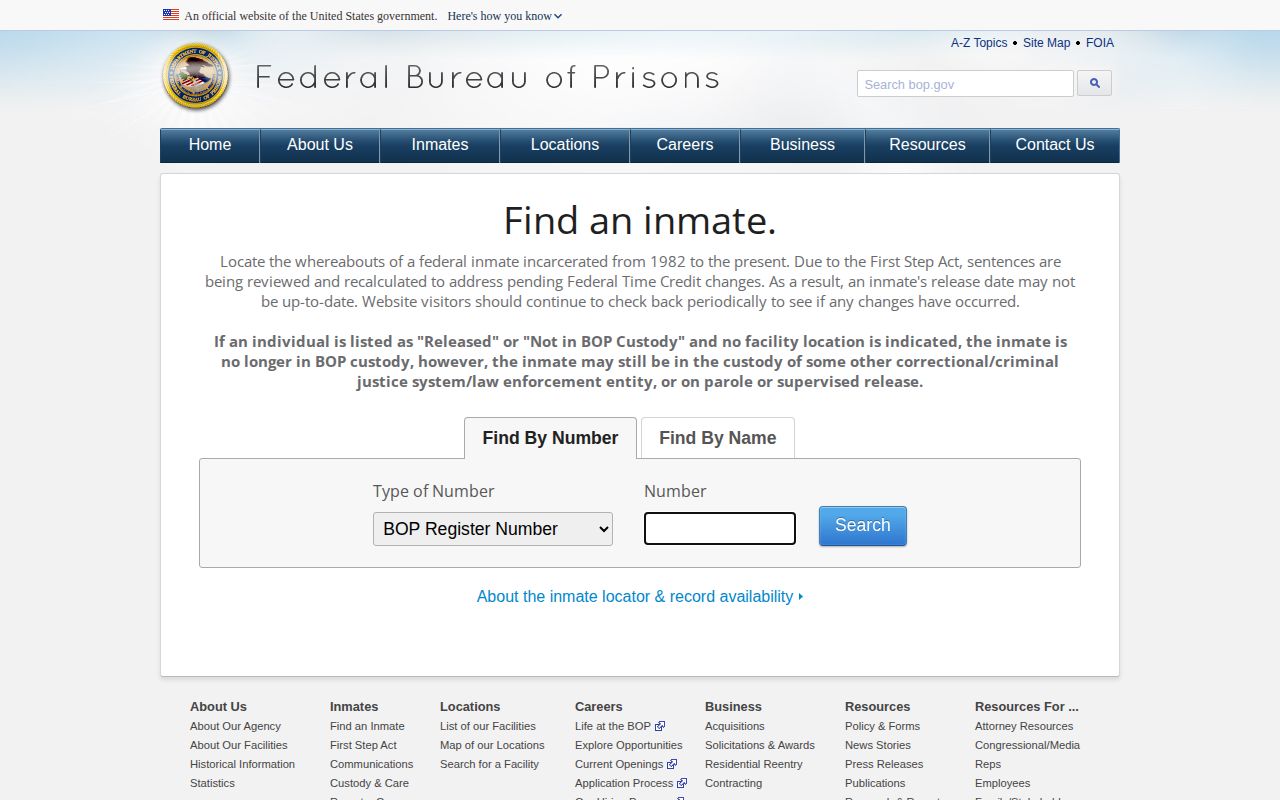
The locator is the correct public starting point when the person served a federal sentence.
Keep the result with the court case number and register number. Those identifiers help resolve a later date change or a person with the same name.
BOP Release Status Meaning
BOP's own records explanation is important because it limits what a locator label proves. A release can lead to federal supervised release, another sovereign's warrant, state custody, ICE custody, or no further confinement. The public result will not always explain which one applies.
- Released
- BOP records that its custody ended on the listed date.
- Not in BOP Custody
- No current BOP placement is shown, but another authority may still act.
- Supervised release
- A federal court-ordered community term that follows imprisonment in many cases.
- Detainer
- A request that another authority receive or hold the person after present custody.
The BOP locator records explanation is captured below. It supports the distinction between federal release and a claim that all legal control has ended.
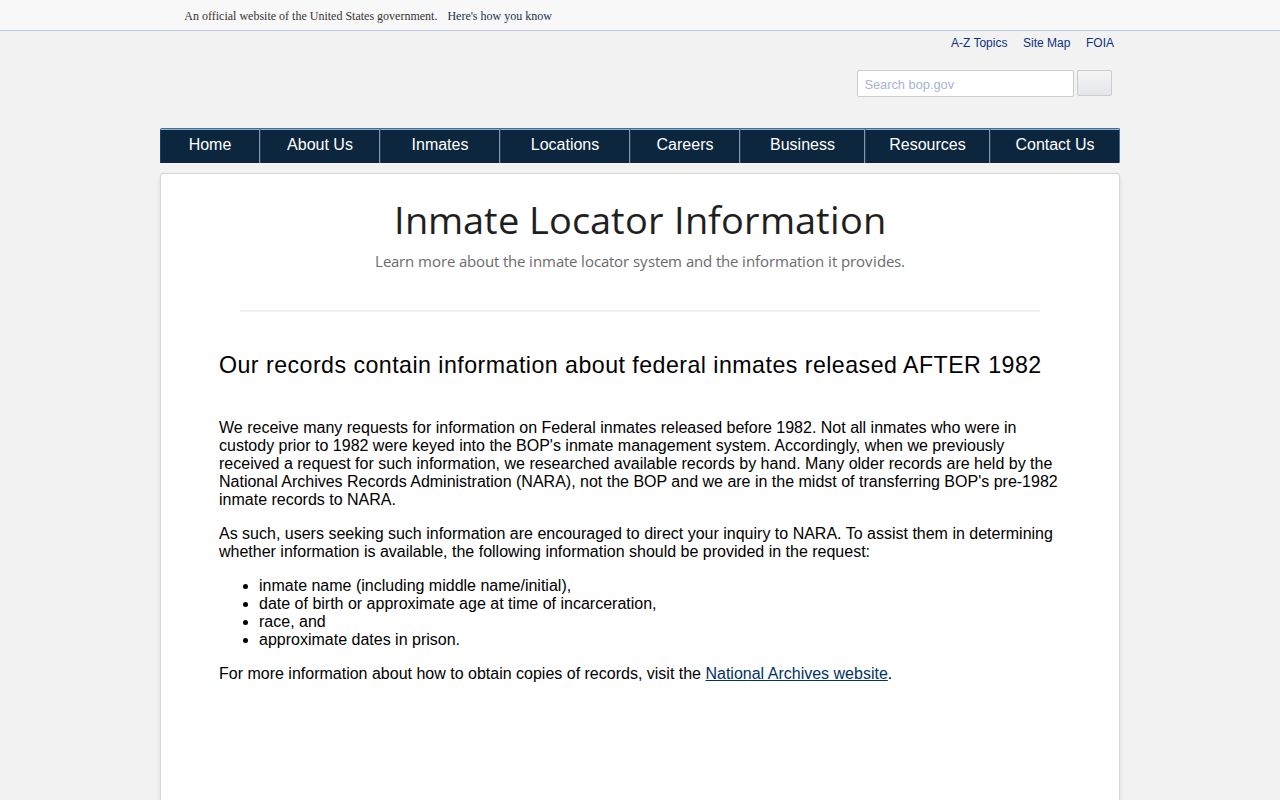
The explanation provides the date range and warns that another system may still have custody or supervision.
Note: Federal supervised release is verified through the federal court process, not Georgia DCS.
Fort Benning Federal Cases
Fort Benning's presence makes the federal path locally significant. An on-post law-enforcement event may begin with the Directorate of Emergency Services or military police. If prosecuted as a federal crime, custody may move to U.S. Marshals before any BOP sentence begins.
The Marshals Service houses and transports federal prisoners from entry into federal custody until acquittal or incarceration. The court decides bond or remand. BOP becomes relevant only after a federal prison commitment. Therefore, a person released before trial or acquitted may have no BOP release record even though a federal case existed.
| Stage | Record source |
|---|---|
| On-post contact | Fort Benning DES / Military Police |
| Federal bond or detention | Federal court and U.S. Marshals path |
| Federal prison sentence | BOP inmate locator |
| After prison | BOP release date and federal court supervision record |
This sequence prevents a BOP search from being used for a person who never reached the federal prison system.
Federal Release Verification Limits
Do not use GDC to verify a federal sentence. Do not use BOP to verify a county bond release. Do not use ICE's locator as a past federal prison archive. Each system answers a distinct custody question.
When a BOP date appears wrong or outdated, compare it with the sentencing court docket and any later order. Federal sentences can be recalculated. A public date may change as the sentence is reviewed under federal law. Record the date of the lookup and the register number.
If the person is absent from BOP, check whether the name was entered correctly, whether the record predates 1982, and whether the person was only in Marshals or local custody. The court case is the durable bridge between those stages.
Federal Release Follow-Up
A released federal prisoner may still report under supervised release. The sentencing court and federal probation system identify that obligation. Georgia parole and the Chattahoochee DCS Office do not administer federal supervised release.
An ICE transfer is also distinct. If immigration authorities received the person, the ICE Online Detainee Locator may show current or recent immigration custody. A county jail release record or BOP release date only marks the end of that agency's control.
The most reliable federal release check uses three facts together: the BOP status, the displayed release date, and the federal court record. Add the receiving agency when a transfer or detainer appears. That gives a complete custody path without confusing a change of agency with community release.
BOP Identity Match Checks
Common names require more than a date. Compare the federal register number, age, race, sex, court case, and sentencing district. A release date tied to the wrong register number is not useful evidence. Preserve the exact result and search date before asking an agency to resolve a conflict.
If a sentence was amended, the court docket may explain why the public date moved. BOP owns its custody calculation, while the court owns the judgment and later orders. Reading both sources keeps a recalculated date from being mistaken for the end of all federal authority.
A BOP release date should be written with the source and lookup date. Federal sentence calculations can change. If two saved results differ, compare the sentencing docket and ask the responsible federal source for clarification.
Federal custody before sentence can be housed outside BOP prisons. A Marshals stage may yield no BOP record. Release on federal bond is confirmed through the court order. Time served can also produce a different locator trail from commitment to a BOP institution.
After BOP release, supervision remains part of the federal case. The sentencing court identifies the term and later action. Do not route that question to Georgia parole or DCS. State and federal supervision use different authority even when the person lives in Chattahoochee County.
A transfer destination can settle an apparent conflict. If BOP records release to another authority, search that receiving system and keep the BOP date as the end of federal prison control. If the court shows supervised release, use the federal supervision record. Each fact should retain its agency label, date, and identifier so that later changes remain traceable.